Securing a dependable pest control service Nashville property owners can rely on requires systematic biological intervention rather than indiscriminate chemical spraying across living areas. CanyonWisp Pest Response delivers measured, clinical pest suppression focused on isolating structural perimeters, clearing active colonies, and protecting interior living zones from contamination.
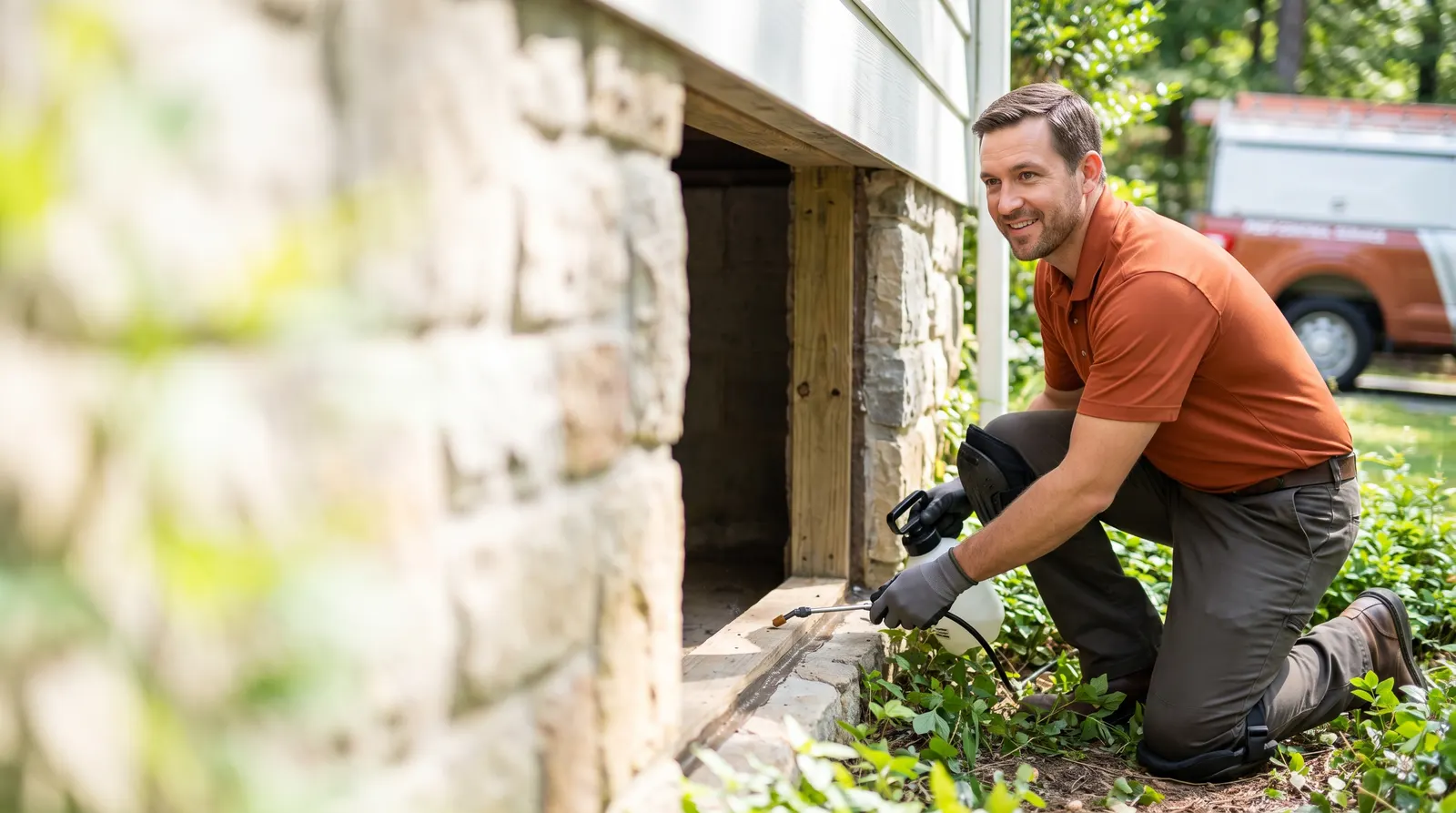
A professional pest control service in Nashville is an integrated extermination and structural exclusion protocol designed to eliminate active insect and mammalian infestations across Davidson County properties while sealing envelope gaps to prevent reinvasion.
Every service reflects the same meticulous attention to detail, whether it's a single job or a larger pest control sevice project across Nashville.
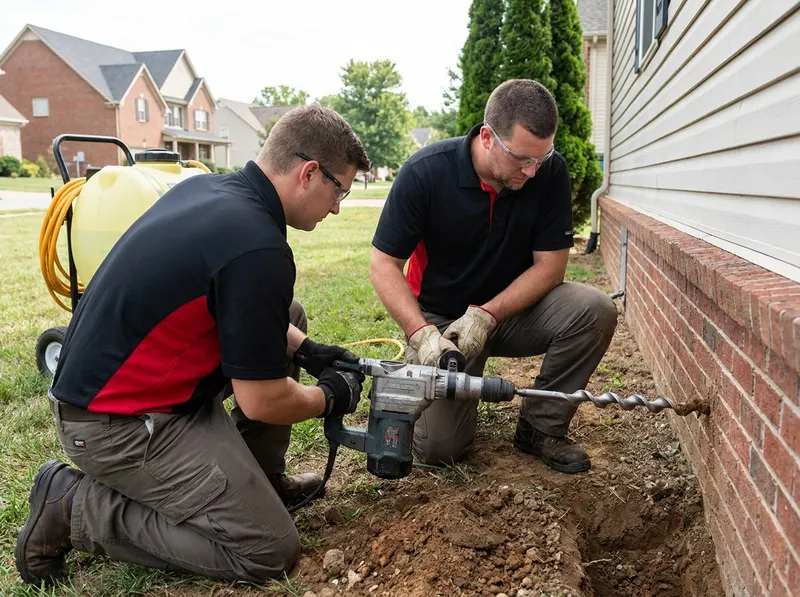
Subterranean termite treatments target Reticulitermes flavipes colonies moving upward from limestone soils into sill plates and wall studs. Protocols combine perimeter liquid barriers using termiticides evaluated by the EPA Pesticide Programs with non-invasive subterranean monitoring stations placed every 10 to 15 linear feet along foundation perimeters. Initial remediation includes systematic moisture detection, hollow-wood sounding, and comprehensive exterior foundation drilling to sever subterranean shelter tubes entering structural elements. Technicians trench along foundation footers to a minimum depth of 6 inches, applying non-repellent liquid termiticides at a rate of 4 gallons per 10 linear feet per foot of depth, creating an unbroken chemical curtain that foraging workers transfer throughout the subterranean colony. Interior wall voids displaying moisture meter spikes exceeding 18% receive precision dry-foam injections containing fipronil, which binds to structural timber and neutralizes satellite galleries within 48 to 72 hours. Standard treatments begin at a $250 baseline.
Get a quote →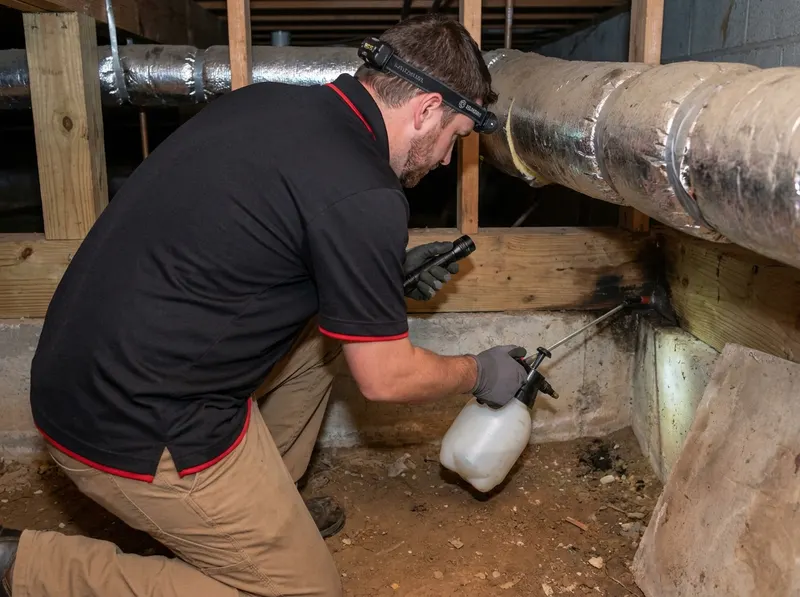
Mitigating Loxosceles reclusa requires specialized protocols tailored to native architectural harborages in Middle Tennessee. Treatment combines void dusting using silica aerosols, physical exclusion across baseboards, and passive sticky trapping grids mapped across subflooring and attic rafters. Technicians identify environmental vectors according to structural guidelines documented by the University of Tennessee Extension , targeting inactive storage boxes, drop ceilings, and crawlspaces without contaminating HVAC air pathways. Because brown recluses exhibit necrophagous habits and actively groom in enclosed spaces, technicians deploy amorphous silica dusts into wall chases, plumbing penetrations, and knee walls using specialized electric bellows dusters operating at low pressure to prevent airborne drift. Catch surfaces consisting of 60 to 90 numbered glue monitors are indexed on structural site maps to establish baseline population densities and pinpoint exact harborage clusters within structural floor trusses. Follow-up reviews at 30 and 60 days assess population collapse and determine targeted re-treatments. Initial brown recluse remediation protocols start at $325.
Get a quote →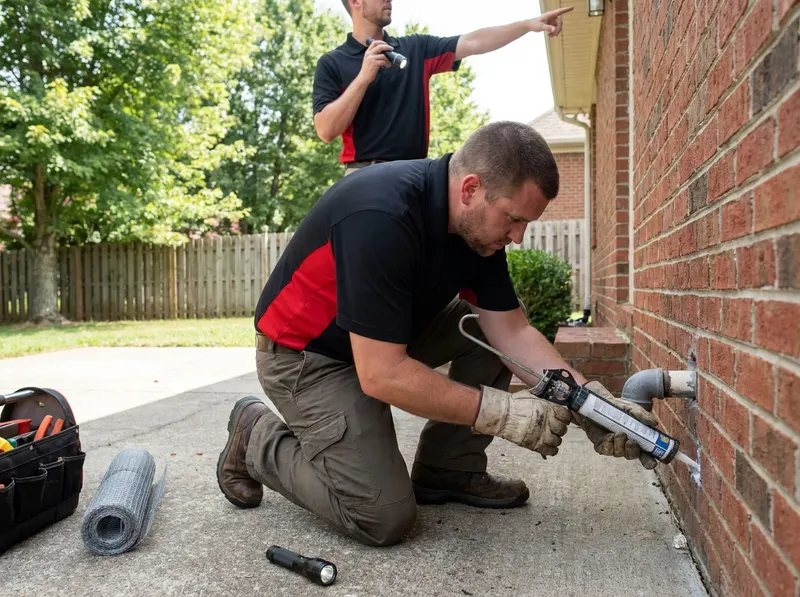
Rodent exclusion stops Rattus norvegicus and Mus musculus intrusions before gnawing damages structural wiring, HVAC flex ducting, and spray-foam insulation. Field operations prioritize physical containment conforming to safety and building codes overseen by the Tennessee Department of Commerce and Insurance . Structural crews seal entry gaps larger than one-quarter inch using 18-gauge 1/4-inch hot-dipped galvanized hardware cloth, copper mesh, and elastomeric sealants. Gable vents, soffit transitions, and crawlspace doors receive reinforced physical screens that resist rodent incisors. Inside the building envelope, mechanical trapping arrays deployed inside tamper-resistant stations clear active individuals within 72 hours, avoiding secondary poisoning risks associated with anticoagulant rodenticides. Attic and crawlspace restorations include vacuum removal of localized droppings using HEPA-filtered negative air machinery followed by surface misting with enzymatic sanitizers that neutralize urine protein pheromone trails that attract exterior foraging rodents. Baseline containment setups start at $275.
Get a quote →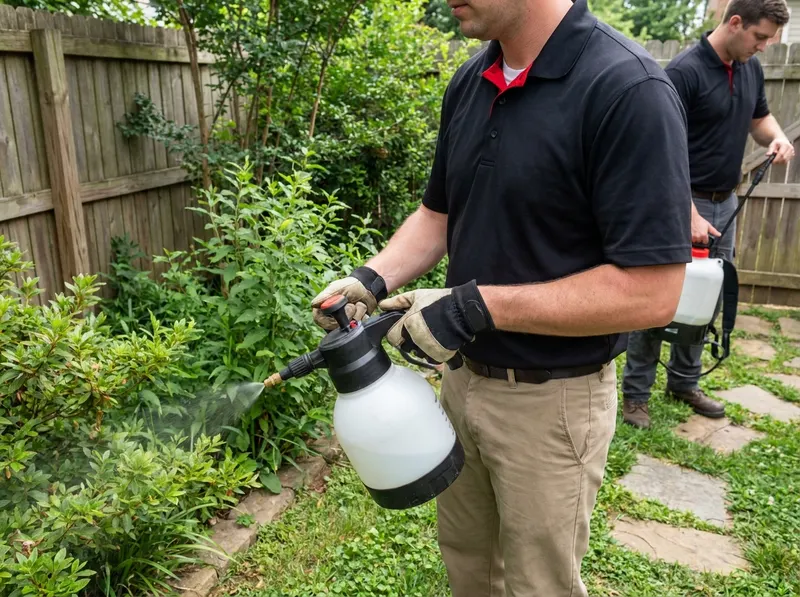
Mosquito suppression targets Aedes albopictus and Culex pipiens vectors across shaded residential landscape zones. Systems integrate targeted foliage misting using microencapsulated pyrethroids and insect growth regulators (IGRs) that disrupt adult chitin synthesis. Applications follow conservation practices established by the Tennessee Wildlife Resources Agency to safeguard non-target pollinators and aquatic habitats. Technicians map shaded shrubbery, downspout catch basins, and under-deck voids where female mosquitoes harbor during peak daylight temperatures. Standing water reservoirs that cannot be drained receive applications of Bacillus thuringiensis israelensis (BTI) briquettes, a naturally occurring soil bacterium that targets mosquito larvae in their aquatic instar phases without harming beneficial organisms, fish, or household pets. Treatment cadences run every 21 to 28 days from April through October to suppress reproduction across shifting Cumberland Valley rain patterns. Initial outdoor vector treatments start at $250.
Get a quote →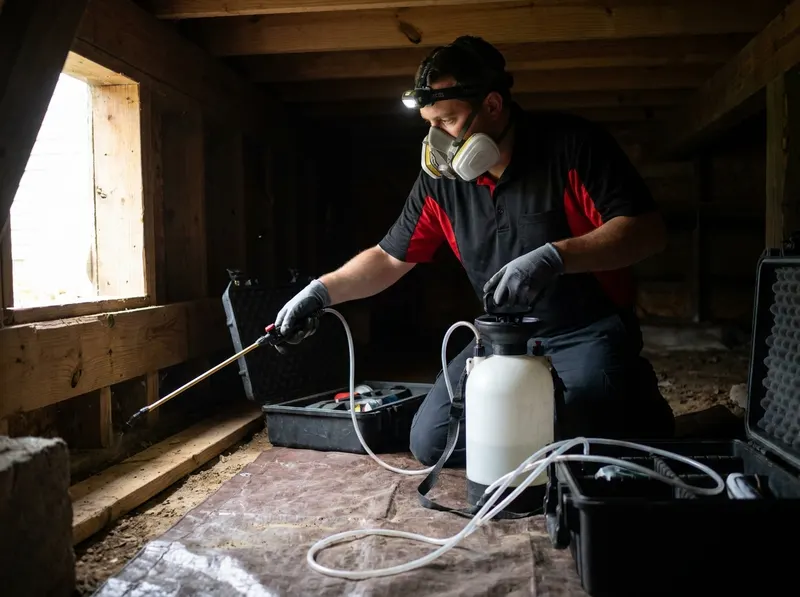
Crawlspace environments beneath historic Nashville pier-and-beam foundations harbor chronic fungal spores, camel crickets, and wood-boring pests. Protocols align with moisture management criteria defined by the Oak Ridge National Laboratory Building Technologies Research and Integration Center . Technicians clean localized biological contaminants, extract failed fiberglass insulation batts saturated with pest pheromones, and deploy commercial desiccant dehumidifiers to drop relative wood moisture below 15%. Ground planes receive continuous 12-mil cross-laminated vapor barriers mechanically secured and sealed at perimeter stem walls and support piers using polyurethane mastic. Foundation vent penetrations receive rigid seal caps, and interior perimeter footers receive targeted borate salt spray applications that penetrate wood fibers up to 1/2 inch to provide permanent deterrence against wood-decay fungi, powderpost beetles, and structural carpenter ants. Decontamination and moisture abatement programs start at $450.
Get a quote →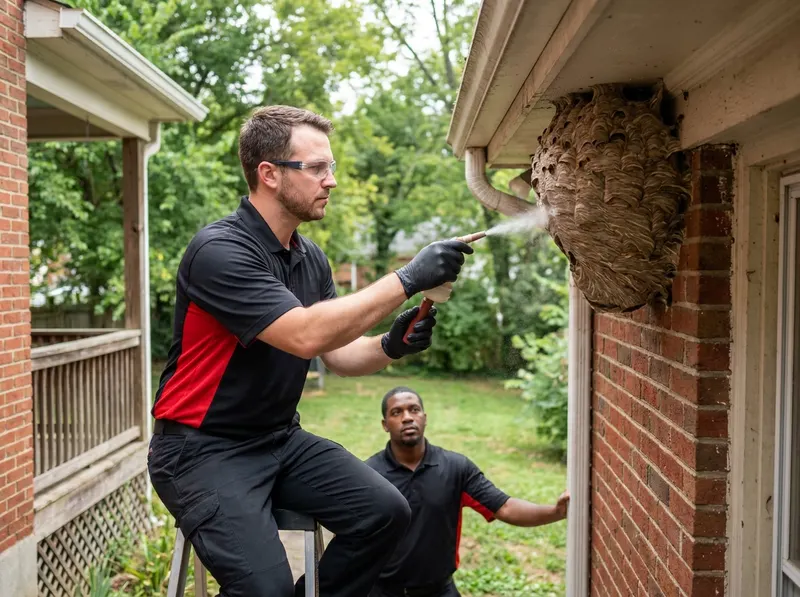
Stinging insect remediation isolates and neutralizes Polistes paper wasps, Vespula yellowjackets, and Vespa crabro European hornets nesting along exterior eaves, fascia boards, and chimney chases. Technicians wear protective containment suits and apply rapid-acting freezing agents or pressurized pyrethrum foams that envelop aerial nests within seconds to stop aggressive swarm patterns. Cavity infestations residing behind brick veneer or cedar siding receive specialized injection probes delivering non-residual dust formulations directly into the brood comb. Structural technicians follow safe chemical handling standards verified by the Tennessee Department of Agriculture , preserving honeybee colonies by partnering with local beekeepers for live extraction when Apis mellifera swarms occupy structural framing voids. Complete physical detachment of exterior paper combs and subsequent application of deterrent pyrethroid barriers on anchor brackets start at $250.
Get a quote →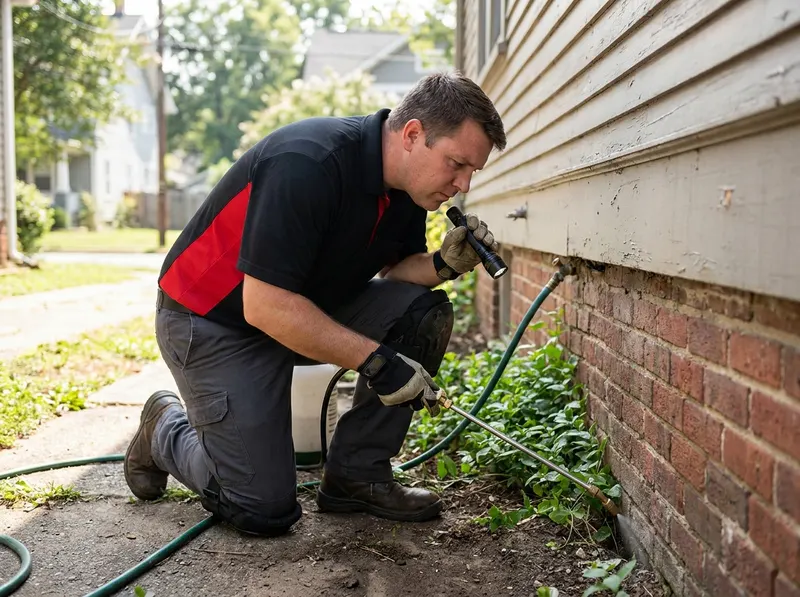
Eliminating Periplaneta americana (American cockroaches) and Blattella germanica (German cockroaches) requires distinct structural disruption tactics. German cockroach protocols target interior kitchen and bathroom motor compartments, hinge plates, and undersink voids using baiting arrays containing fipronil, indoxacarb, and hydramethylnon. Baits are applied in high-density micro-dots to encourage horizontal transfer throughout juvenile populations without inducing bait aversion. American cockroaches, which harbor within municipal sewer connections and damp exterior utility conduits, receive perimeter barrier treatments, drain catch-trap flushing, and exterior door sweep calibration. Chemical strategies adhere to environmental occupational exposure guidelines issued by the Occupational Safety and Health Administration . Field technicians vacuum visible aggregate harborages using HEPA containment systems, instantly lowering reproductive mass before applying insect growth regulators to arrest egg casing development. Interior kitchen elimination protocols begin at $275.
Get a quote →Cimex lectularius eradications rely on dual-phase heat disruption and microencapsulated chemical application. Technicians systematically strip infested bedrooms, elevating mattress seams, baseboard channels, and wall plates to confirm harborage sites with high-intensity ultraviolet inspection lamps. Infested box springs and furniture frames receive dry thermal vapor treatments exceeding 180 degrees Fahrenheit, penetrating mattress tufts and fabric joints to eradicate heat-sensitive eggs instantly upon contact. Wall perimeters, bed frames, and electrical box rough-ins receive non-repellent liquid insect growth regulators paired with desiccant dusts according to protocols cataloged by the National Pest Management Association . Bed leg interception traps are positioned under structural furniture anchors to confirm eradication over a mandatory 30-day post-treatment monitoring window. Initial dual-phase bed bug remediation regimens start at $350.
Get a quote →You get a firm, itemized quote for your pest control sevice before any work begins, no surprises, no pressure.
Careful prep, tidy work, and a full cleanup when we are done. We treat your home and belongings like our own.
The same trusted, background-checked team from the first call to the final check.
Selecting appropriate intervention methods depends directly on biological target traits, structural architecture, and property boundary conditions. If an infestation involves localized social insects like odorous house ants or carpet beetles, target-specific non-repellent baits and micro-barrier perimeters provide complete elimination without driving nests into wall voids. If dealing with wood-destroying organisms such as eastern subterranean termites, structural liquid trenching alongside baiting stations provides continuous subterranean defense; the trade-off involves localized soil excavation and exterior perimeter drilling compared to less invasive surface sprays.
For brown recluse management in crawlspaces and attics, structural dehumidification and specialized dust treatments provide lasting population suppression; the trade-off is an intensive initial inspection timeline and ongoing mechanical trapping rather than a single rapid knockout. When structural framing suffers from roofline rodent entries, physical exclusion using galvanized steel hardware cloth stops attic nesting permanently, whereas relying strictly on interior bait blocks leaves building wiring vulnerable to continuous gnawing. When subterranean moisture draws silverfish and centipedes into finished basements, sealing expansion joints and running commercial desiccant dehumidifiers corrects the microclimate; the trade-off is higher initial mechanical costs compared to short-lived contact insecticide sprays.
For exterior biting insects like mosquitoes, biological larvicides paired with automated perimeter misting clear shaded foliage; the trade-off is recurring seasonal applications versus permanent structural exclusion.
Every project gets a firm, written price after a free on-site visit. Ranges below for orientation.
Tell us about your pest control sevice job and we'll send a clear, written quote, usually the same day. Or just call and talk to a real Nashville pro.
(629) 319-7822
Properties built across Davidson County face complex geological and architectural pressures that accelerate pest entry. From the porous Ordovician limestone bedrock of the Central Basin to the dense river bottom soils flanking the Cumberland River, subterranean moisture forces ground-dwelling pests directly toward residential foundations. In historic craftsman bungalows across East Nashville and Sylvan Park, native unsealed floor joists and unconditioned crawlspaces maintain elevated humidity levels exceeding 70%, creating optimal conditions for brown recluse spiders, wood-boring powderpost beetles, and eastern subterranean termites. Meanwhile, modern multi-story developments in The Nations and Germantown frequently feature flat-roof configurations and tight zero-lot-line wall gaps where mice and Norway rats navigate structural weep holes and vertical utility chases. Seasonal weather patterns further intensify activity: spring soil warm-ups above 70 degrees Fahrenheit trigger mass subterranean termite flights along the Shelby Bottoms Greenway and Centennial Park corridors, while sudden autumn temperature drops across the Highland Rim force rodent populations out of wooded parklands like Percy Warner Park and Radnor Lake State Park into domestic attics along Granny White Pike and West End Avenue.
Free estimates for Nashville & the surrounding area.
 CanyonWisp Pest Response