CanyonWisp Pest ResponseCanyonWisp Pest Response

Bed Bug Thermal & Chemical Protocol Nashville

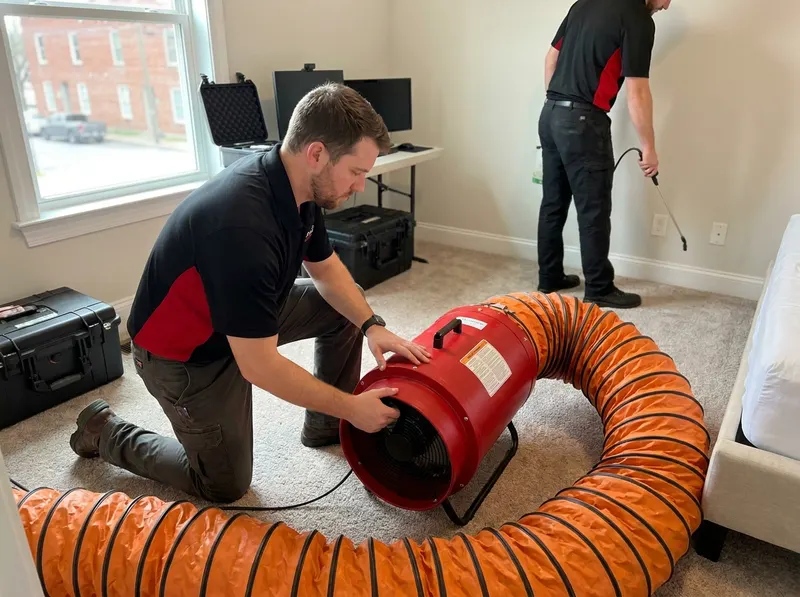
Residential bed bug remediation in Middle Tennessee requires an exacting balance between thermal thermodynamics and precision residual barriers. Infestations inside historic timber structures in Belmont-Hillsboro or…
Get My Free Estimate →(629) 319-7822
Bed Bug Thermal & Chemical Protocol in Nashville, TN
Quick answer
  • What is included: Full structural thermal bake to 122°F, 135°F, specialized HEPA vacuum extraction of nesting seams, and EPA-registered residual spot application to structural void spaces.
  • How fast: Standard thermal remediation cycles require 6 to 8 hours of continuous heat exposure, with properties typically cleared for re-entry on the same day.
  • What it costs: Ballpark costs range from $850 to $2,850 depending on square footage, room count, and clutter volume, with a firm minimum service rate of $250.
  • What we treat: Mattresses, box springs, baseboards, bed frames, soft furniture, perimeter carpet tack strips, wall voids, and deep structural gaps.
  • How to book: Contact CanyonWisp Pest Response directly at (629) 319-7822 to schedule a free on-site verification assessment; exact pricing is confirmed during inspection.

Residential bed bug remediation in Middle Tennessee requires an exacting balance between thermal thermodynamics and precision residual barriers. Infestations inside historic timber structures in Belmont-Hillsboro or East Nashville often migrate rapidly behind lath-and-plaster walls and under pine flooring. The thermal component utilizes industrial electric heaters and radial air movers to elevate interior structural voids to a lethal range between 122°F and 135°F, following pest management guidelines outlined by the U.S. Environmental Protection Agency. According to thermal mortality research indexed by the Journal of Economic Entomology, sustained exposure to 122°F achieves 100% mortality in adult bed bugs, nymphs, and eggs within minutes, bypassing the widespread pyrethroid resistance documented by the Entomological Society of America.

While thermal treatments provide immediate zero-point eradication without pesticide reliance in open air, they carry zero residual activity once the structure cools. Consequently, CanyonWisp Pest Response integrates targeted application of non-repellent liquid formulations and desiccant dusts, such as amorphous silica gel, within perimeter voids, electrical faceplates, and carpet tacking strips. These chemical barrier practices align with structural guidelines documented by the National Pest Management Association and pesticide compliance frameworks enforced by the Tennessee Department of Agriculture. The protocol ensures that any insect attempting re-entry from untreated external breezeways, common in multi-family complexes across Antioch or Germantown, contacts a persistent agent that degrades their protective lipid cuticle.

Technicians deploy specialized wireless temperature sensors throughout baseboard perimeters, subflooring, and dense furniture cores to monitor temperature gradients continuously. Operational protocols mandate compliance with Occupational Safety and Health Administration electrical standards to manage heavy amperage safely within older urban builds, including bungalows found in Sylvan Park and The Nations. Structural airflow monitoring follows thermal distribution dynamics established by the American Society of Heating, Refrigerating and Air-Conditioning Engineers, guaranteeing heat saturation penetrates insulated interstitial zones without warping delicate trim.

Preparation accuracy determines overall treatment efficacy. In accordance with safety literature from the Centers for Disease Control and Prevention and consumer storage regulations overseen by the Consumer Product Safety Commission, residents must isolate aerosol cans, vinyl records, volatile liquids, and wax items prior to thermal deployment. If an infestation is localized to a single modern unit in 12 South, targeted desiccant micro-dusting and crack-and-crevice treatments may be deployed; however, multi-room single-family homes in Green Hills or Inglewood displaying established breeding harborages require the combined thermal and chemical protocol to secure complete elimination. CanyonWisp Pest Response delivers this dual protocol without ongoing, locked-in monthly contracts. Call (629) 319-7822 to confirm local technician scheduling.

How much does Bed Bug Thermal & Chemical Protocol cost in Nashville?

Single Room / Small Area Chemical Barrier Protocol$250, $450
1 to 2 Bedroom Residence Thermal & Residual Treatment$850, $1,450
3 to 4 Bedroom Residence Thermal & Residual Treatment$1,500, $2,350
5+ Bedroom / High-Density Structural Remediation$2,400, $3,200

Every job gets a firm, written price after a free on-site visit.

Common questions

How much does bed bug thermal treatment cost in Nashville?
Ballpark pricing in Nashville ranges between $850 and $2,850 for comprehensive whole-structure thermal remediation, depending on total square footage, structural density, and infestation severity. CanyonWisp Pest Response operates with an absolute minimum charge of $250 for targeted spot evaluations or localized perimeter applications, with exact final costs confirmed during an on-site structural inspection.
How long does the thermal heating protocol take to complete in a Nashville home?
A standard thermal cycle requires 6 to 8 hours of active treatment time, during which ambient indoor temperatures are held between 122°F and 135°F. Including setup, temperature stabilization, cooldown, and post-heat chemical barrier application, Nashville residents are typically able to safely return to the home 8 to 10 hours after technicians first arrive.
Can heat treatments damage household electronics or structural items?
Regulated thermal treatments conducted below 135°F do not damage standard household electronics, standard structural components, or major appliances. However, delicate heat-sensitive items, including vinyl blinds, wax candles, musical instruments, aerosol canisters, and prescription medications, must be removed prior to service according to pre-treatment protocols provided by CanyonWisp Pest Response.
Why is a chemical barrier added to the heat treatment in Nashville structures?
A chemical barrier is applied alongside heat because thermal treatment leaves no residual protection once the building returns to normal room temperature. Applying residual insect growth regulators and desiccant dusts in wall cavities and under baseboards ensures long-term protection against bed bugs that may be reintroduced on luggage, clothing, or shared utility pathways in Nashville neighborhoods.
Are the chemical residual products safe for indoor residential spaces?
The residual formulations applied by CanyonWisp Pest Response are EPA-registered for indoor structural applications and placed exclusively in inaccessible harborage points such as wall voids, baseboard crevices, and furniture framework. Residents remain out of the structure until all products are completely dry, after which the indoor air environment is completely safe for normal occupancy.

Get started today

Tell us about your bed bug thermal & chemical protocol job in Nashville and we'll send a clear, written quote, usually the same day.

Get your free PEST CONTROL SEVICE quote, Nashville

We only use your ZIP to check availability, no spam.