Commensal rodents exploit Nashville's distinct seasonal fluctuations, moving indoors as autumn temperatures fall across Davidson County. Urban properties in Germantown and East Nashville often encounter roof rat…
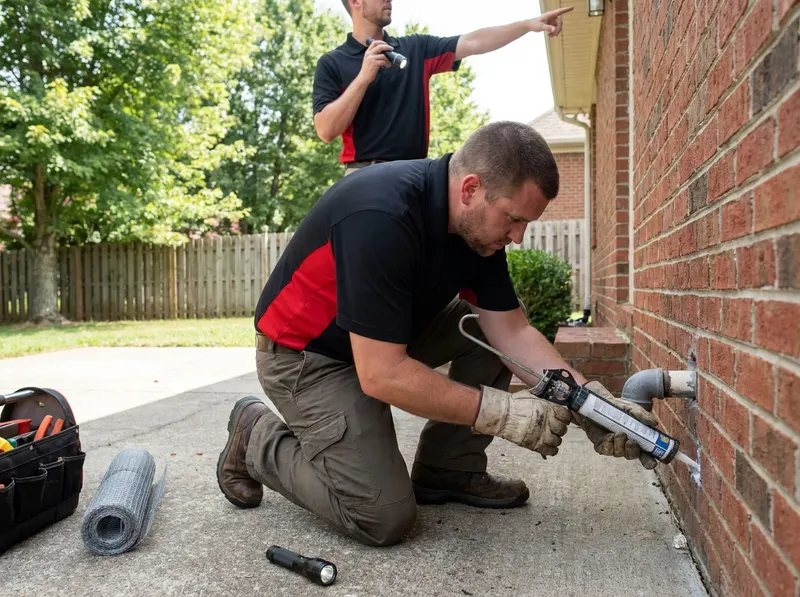
Commensal rodents exploit Nashville's distinct seasonal fluctuations, moving indoors as autumn temperatures fall across Davidson County. Urban properties in Germantown and East Nashville often encounter roof rat activity linked to mature tree canopies, while mid-century ranch foundations in Donelson and Antioch frequently develop crawlspace intrusions from field mice seeking subfloor warmth. Effective rodent control relies on physics rather than broadcast rodenticides. Standard poisons create secondary hazard risks for household pets and leave carcasses to decay within wall framing. In contrast, Integrated Pest Management (IPM) guidelines established by federal regulatory frameworks dictate that physical exclusion remains the primary line of long-term interior defense. CanyonWisp Pest Response applies non-corrosive, gnaw-proof materials to all viable exterior voids, systematically ending the structural chewing that degrades thermal insulation and creates hazardous short circuits in residential electrical wiring.
Rodent exclusion cost factors in Davidson County balance structural perimeter footage against the labor required for elevation access. Minor interventions, such as installing steel foundation vent screens on brick bungalows in Sylvan Park or 12 South, average between $250 and $450. Complete structural fortresses involving dormer returns, soffit junctions, and roof ridge vents on multi-story residences in Green Hills or Belmont-Hillsboro require extensive staging and specialized sealants, landing closer to $1,800 to $2,400. In every scenario, structural proofing avoids the recurring costs and lingering anxieties of endless monthly bait box refills. The initial investment secures building envelopes permanently, preventing structural wire stripping documented under NFPA 70 fire safety codes and stopping drywall deterioration.
Technicians target biological entry thresholds based on empirical animal physiology. According to the Centers for Disease Control and Prevention, adult house mice enter gaps measuring just 0.25 inches wide, the diameter of a standard pencil, while mature rats require only 0.5 inches. Physical sealing utilizes 19-gauge galvanized welded ASTM A740 hardware cloth paired with copper mesh and elastomeric polyurethane sealants that rodents cannot compromise. Gable vents near Percy Warner Park, weep holes along brick veneers in The Nations, and unsealed AC line chases adjacent to the Shelby Bottoms Greenway represent the most common thermal bypasses invaded by outdoor vermin. Sealing these voids stops structural infiltration before animal dander and fecal particulates contaminate return air ducts regulated under ASHRAE 62.2 residential ventilation standards.
Containment protocols occur simultaneously within the interior perimeter. Technicians position snap-trap runs within non-living zones, including attics, unfinished basements, and sill plates, removing isolated populations within 3 to 7 days without chemical baits. Trapping procedures follow wildlife guidelines from the Tennessee Wildlife Resources Agency, protecting native non-target species around nearby environments like Radnor Lake State Park and Centennial Park. Damaged, urine-soaked cellulose or fiberglass batts are extracted under strict biohazard hygiene standards aligned with OSHA respiratory safety regulations, followed by broad-spectrum antimicrobial misting across contaminated floor joists to eliminate airborne bacteria and pheromone trails. CanyonWisp Pest Response operates transparently across Davidson County with zero forced annual contract lock-ins, delivering direct, uncompromised structural defense.
Every job gets a firm, written price after a free on-site visit.
Tell us about your rodent exclusion & containment job in Nashville and we'll send a clear, written quote, usually the same day.
 CanyonWisp Pest Response