Managing Loxosceles reclusa requires understanding the structural biology of older residential architecture in Middle Tennessee. The brown recluse spider thrives in dark, undisturbed dry voids, making the stone…
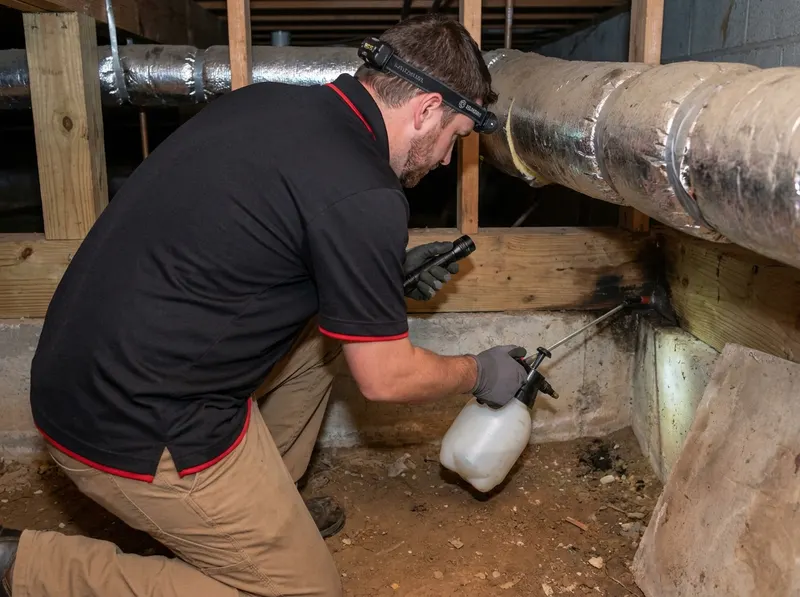
Managing Loxosceles reclusa requires understanding the structural biology of older residential architecture in Middle Tennessee. The brown recluse spider thrives in dark, undisturbed dry voids, making the stone foundations of Belmont-Hillsboro, unconditioned attics in East Nashville bungalows, and crawlspaces in Donelson prime microhabitats. Unlike hunting spiders that cross treated floor perimeters, recluse spiders climb inside wall studs and subflooring, insulated from broad surface sprays. According to research from the University of Kentucky Department of Entomology, broadcast aerosol treatments often fail because they scatter spiders deeper into structural voids rather than eliminating them. CanyonWisp Pest Response applies an Integrated Pest Management (EPA IPM Principles) approach, using specialized electric dusters to place amorphous silica aerogel behind outlet switch plates, baseboards, and attic joists, drying out arachnid exoskeletons upon contact.
Residential homes bordered by mature trees near Shelby Bottoms Greenway, Radnor Lake State Park, and Percy Warner Park face seasonal migration patterns during late spring and mid-summer mating periods. Structural movement occurs when ambient outdoor temperatures climb above 85 degrees Fahrenheit, driving recluses from soffits down into air-conditioned bedrooms, closets, and laundry hampers. Data published by the University of Tennessee Extension outlines that sticky monitoring traps placed flat along baseboards and behind furniture provide the definitive diagnostic tool for measuring relative population counts and pinpointing focal nesting zones. Field protocols prioritize treating mechanical chases, drop ceilings in Germantown rowhouses, and sill plates in Sylvan Park basements, creating defensive buffers directly around sleeping areas and living spaces.
Physical habitat alteration complements chemical placement to achieve durable population knockdown. Sealing pipe penetrations through drywall with expanding foam or copper mesh prevents indoor migrations, adhering to standards set by the National Pest Management Association. Property managers in The Nations and 12 South with multi-level dwellings receive floor-by-floor monitoring grids to track clearance progress over 60 to 90 days. In crawlspaces with exposed earth, installing 10-mil vapor retarders aligned with U.S. Department of Energy Crawlspace Guidelines lowers relative humidity, discouraging secondary prey insects like silverfish and booklice that sustain spider colonies. Technicians working under the structural pest framework of the Tennessee Department of Agriculture Pesticide Division handle applications with precise micro-injectors, minimizing off-target exposure while securing hidden living cavities.
Every job gets a firm, written price after a free on-site visit.
Tell us about your brown recluse management job in Nashville and we'll send a clear, written quote, usually the same day.
 CanyonWisp Pest Response