Residential properties throughout Davidson County confront intensive mosquito pressure generated by high summer humidity, dense river basin canopies, and persistent standing water. Properties bordering riparian…
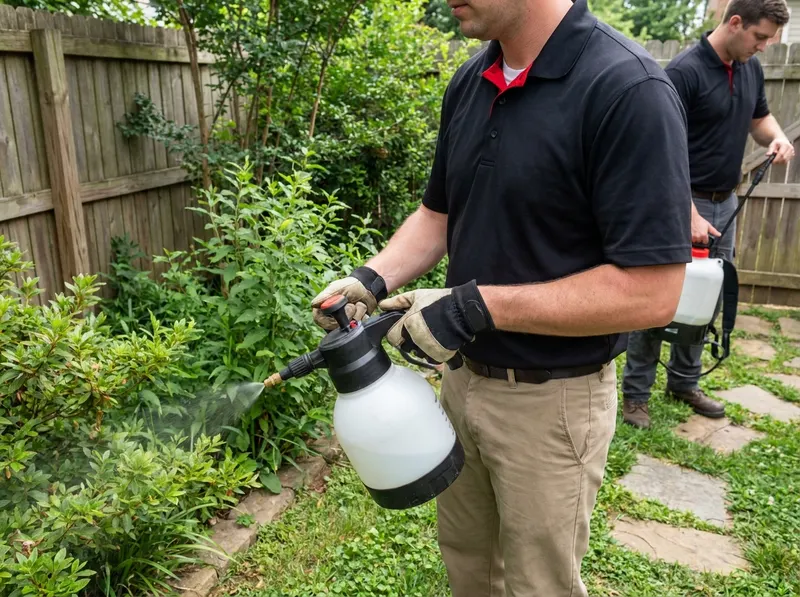
Residential properties throughout Davidson County confront intensive mosquito pressure generated by high summer humidity, dense river basin canopies, and persistent standing water. Properties bordering riparian corridors near the Cumberland River Compact watershed, low-lying yards in East Nashville and Inglewood, and mature tree canopies in Green Hills create ideal breeding pools for Culex and Asian tiger mosquitoes (Aedes albopictus). A dedicated mosquito suppression system targets these insects where they breed and rest rather than attempting broad broadcast spraying over non-target open turf. Integrated protocols follow guidance from the EPA Mosquito Control framework, delivering targeted residual treatments to the undersides of dense foliage, shade perennials, drainage swales, and structural crawl space vents. In riparian zones adjacent to Shelby Bottoms Nature Center or wetlands surrounding Radnor Lake State Park, treatments focus on standing-water abatement using granular Bacillus thuringiensis israelensis (Bti), regulated by the Tennessee Department of Agriculture Pesticide Division, which neutralizes larvae before pupation without harming aquatic life or predatory insects.
Property infrastructure dictates the mechanical selection between automated misting line hardware and periodic barrier fogging. Properties spanning half-acre footprints in Sylvan Park, Belmont-Hillsboro, and 12 South with tight property boundaries achieve superior control via backpack mist-blower applications of micro-encapsulated pyrethroids every 21 to 28 days. This interval corresponds to the developmental life cycle documented by the CDC Mosquito Control Program. Conversely, larger acreage in Antioch or parcels featuring perimeter fencing in The Nations often benefit from automated tankless misting circuits mounted directly to fence lines, eaves, and landscape perimeters. These systems disperse metered, low-dose water-based botanical formulations at programmed dawn and dusk intervals when pollinators are inactive, aligned with application safety standards maintained by the Entomological Society of America Certification Program. The trade-off between approaches centers on maintenance and infrastructure investment: automated continuous systems require dedicated winterization protocols and quarterly nozzle calibration, whereas periodic barrier applications demand zero mechanical infrastructure on the home but necessitate regular visits throughout the April-to-October activity window.
1. Technicians complete an initial walk of the property perimeter to map drainage catchments, irrigation pooling, and adult insect harborage zones.
2. Standing standing water reservoirs such as downspout extensions, birdbaths, and exterior plant trays receive targeted biological larvicide according to Association of State and Territorial Health Officials environmental safety standards.
3. Calibrated mist-blower equipment deposits micro-encapsulated residuals beneath vegetative leaves, deck undersides, and foundation perimeters at application rates verified under National Pesticide Information Center guidelines.
4. Technicians inspect fence runs and property margins to maintain drift buffers protecting adjacent properties and beneficial pollinator gardens consistent with the Pollinator Partnership conservation standards.
Implementing a suppression system differs fundamentally from conventional lawn care treatments, as specialized mosquito formulations must bind electrostatically to the underside of leaves where insects rest during heat peaks, rather than washing into root zones. In dense historic neighborhoods such as Germantown and Donelson, urban heat islands accelerate larvae development, requiring early springtime intervention when soil and ambient temperatures sustainably exceed 50 degrees Fahrenheit. Technicians evaluate every site individually to avoid chemical overuse, providing Nashville homeowners with targeted structural protection and restorative outdoor relief without restrictive multi-year contracts.
Every job gets a firm, written price after a free on-site visit.
Tell us about your mosquito suppression system job in Nashville and we'll send a clear, written quote, usually the same day.
 CanyonWisp Pest Response